Article Summary
Malaysian SMEs are most commonly rejected for business loans due to five correctable root causes: the absence of formal financial records, commingling of personal and business bank accounts, the owner’s adverse personal credit record, insufficient collateral, and applying to lenders whose risk criteria do not match the business profile. None of these causes reflects fundamental business failure — all are addressable with the right preparation and placement strategy. This article explains the direct corrective action for each cause and identifies the government guarantee schemes available to asset-light businesses.
The Scale of the Problem
Access to financing consistently ranks among the top constraints cited by Malaysian SMEs. SME Corporation Malaysia’s annual SME Status and Performance Report documents that financing challenges remain a primary growth barrier, a pattern driven not solely by genuine credit risk but by correctable preparation gaps on the part of applicants.
Root Cause 1 — Weak or Inconsistent Financial Records
Banks extend credit on the basis of documented repayment capacity. For SMEs, this evidence must reside in formal financial statements: profit and loss accounts, balance sheets, and cash flow projections. Many owner-managed businesses maintain financial records informally or not at all, making standard credit underwriting impossible regardless of actual business performance.
The corrective action: engage a certified accountant to prepare at least two years of audited or management accounts before any application is submitted. For businesses below the audit threshold, 12 months of management accounts and complete business bank statements are the minimum required.
Root Cause 2 — Commingling of Personal and Business Finances
When business revenue and personal income flow through the same bank account, lenders cannot determine business performance from personal financial activity. This single structural weakness is among the most common and most easily preventable reasons for SME loan rejection.
The corrective action: open a dedicated business current account and operate it consistently for a minimum of 12 months before applying, ensuring all business transactions flow through it without exception.
Root Cause 3 — The Owner’s Personal Credit Record
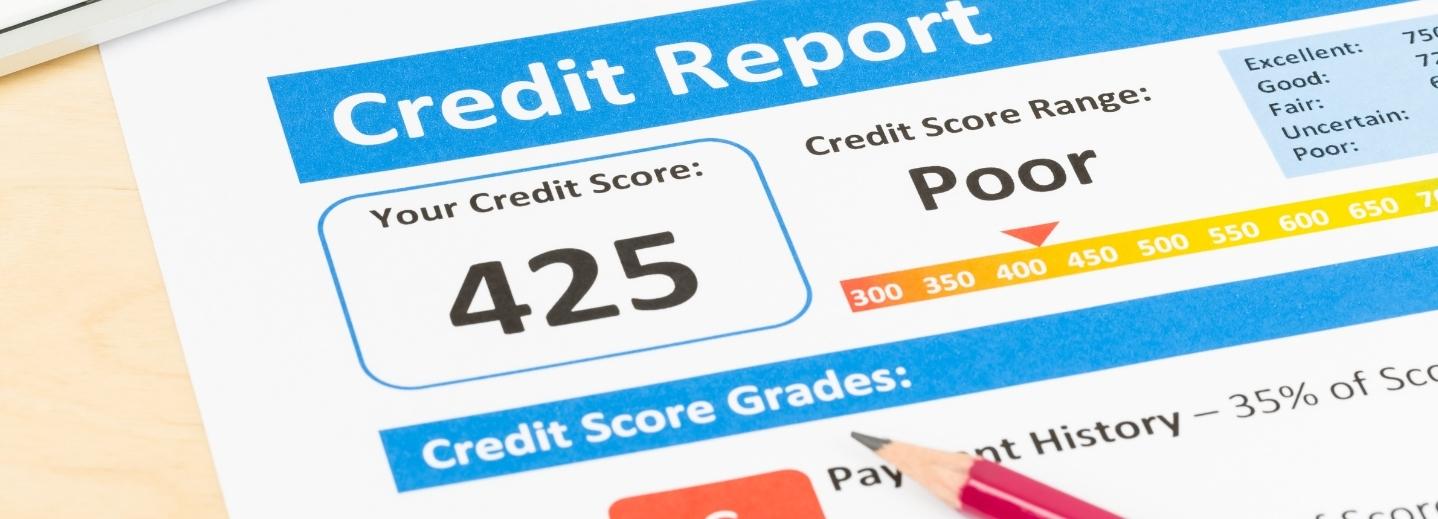
For sole proprietorships and small private limited companies, the owner’s personal CCRIS and CTOS standing frequently serves as a proxy for the business’s creditworthiness. A personal bankruptcy history, a recent pattern of missed personal loan payments, or an excessive personal debt service ratio directly reduces business loan approval prospects regardless of the business’s own financial performance.
Root Cause 4 — Insufficient Collateral or Guarantor Support
Conventional term loans and trade financing facilities commonly require collateral. Asset-light businesses in services, consulting, and technology sectors face structural challenges here. The Syarikat Jaminan Pembiayaan Perniagaan (SJPP) operates government-backed guarantee schemes specifically designed to support SME loan applications where physical collateral is unavailable, covering a portion of the lender’s risk exposure.
Root Cause 5 — Submitting Applications to the Wrong Lender
Not all financial institutions serve all SME profiles with equal appetite. Development finance institutions such as Agrobank and SME Bank serve specific sectors and business stages. Commercial banks vary in their appetite for particular industries, business ages, and collateral types. Applying to a lender whose risk criteria do not align with the applicant’s profile wastes time and generates CCRIS hard inquiries that can damage future applications.
Common Rejection Causes and Their Direct Solutions
| Rejection Cause | Practical Corrective Action |
| No audited or management accounts | Engage certified accountant, prepare 2-year financials |
| Mixed personal and business bank accounts | Open dedicated business current account immediately |
| Adverse owner personal credit record | Address CCRIS and CTOS issues before any application |
| Insufficient collateral offered | Explore SJPP guarantee scheme eligibility |
| Wrong lender for the business profile | Engage a licensed loan advisor for matched placement |
| Business operating for less than 2 years | Target micro-financing and government SME programmes |
Conclusion
Most SME loan rejections are resolvable once the root causes are accurately diagnosed. Our team at AE Finansure’s Business Loan service page specialises in preparing SME applications that meet lender expectations across documentation, structure, and lender placement.
Sources
- SME Corporation Malaysia — SME Annual Report https://www.smecorp.gov.my/index.php/en/resources/2015-12-21-11-07-06/sme-annual-report
- Syarikat Jaminan Pembiayaan Perniagaan (SJPP) https://www.sjpp.com.my
- SME Bank Malaysia https://www.smebank.com.my
- Agrobank Malaysia https://www.agrobank.com.my
- Bank Negara Malaysia — SME Financing Data https://www.bnm.gov.my/sme-financing
- Companies Commission of Malaysia (SSM) — Business Registration https://www.ssm.com.my