Article Summary
A CTOS score below 650 or an adverse CCRIS record does not automatically disqualify a borrower from personal loan access in Malaysia — it narrows the channel and changes the approach required. Licensed advisors, secured loan structures, cooperative financing, and guarantor-supported applications each offer viable pathways depending on the borrower’s profile. This article explains how each option works and what lenders examine beyond the score alone.
What Counts as a Low Credit Score in Malaysia
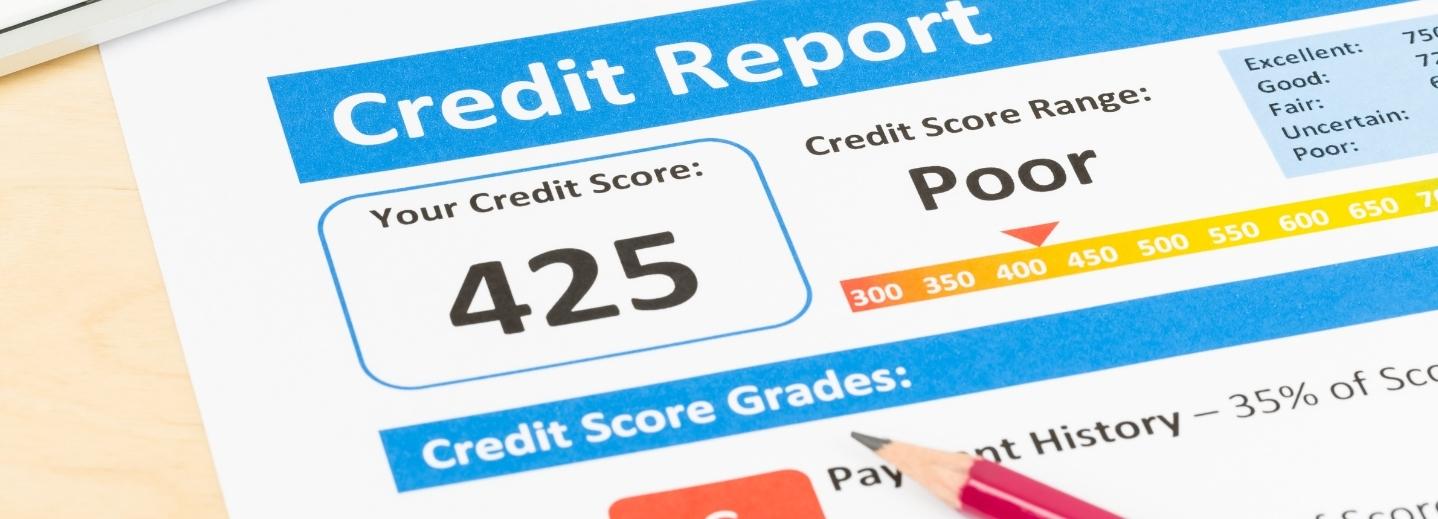
In Malaysia, there are two separate credit reference systems that lenders rely on, and they each look at your financial health in different ways. CCRIS, administered by Bank Negara Malaysia, records repayment conduct across all credit facilities for the preceding 12 months. It does not produce a single numerical score. Instead, a pattern of three or more consecutive missed payments on any facility constitutes a material red flag in any lender’s assessment.
CTOS, operating as a private credit bureau, generates a score on a 300 to 850 scale. According to CTOS published guidelines, scores below 550 are classified as poor, 550 to 649 as fair, 650 to 749 as good, and 750 and above as excellent. Most conventional banking institutions prefer applicants scoring 650 or higher before proceeding to full underwriting.
What Lenders Examine Beyond the Score
Credit score is one data input within a broader decision matrix. Underwriters simultaneously assess:
• Employment tenure and employer category, with government servants and employees of large corporations typically receiving more favourable treatment across most institutions
• Monthly net income measured against the requested loan quantum
• Total credit exposure consolidated across all financial institutions, drawn directly from the borrower’s CCRIS record
• A single missed payment from three years ago is very different from a string of defaults in the last six months. Lenders can see both, but they weigh them very differently.
Financing Channels Available to Borrowers With Impaired Credit
Licensed Financial Advisors and Loan Placement Specialists
A licensed loan advisor maintains panel relationships with a broader range of financial institutions than any single borrower can access directly. This includes lenders that specialise in profiles with less-than-perfect credit histories. Crucially, advisor-facilitated applications reduce the risk of multiple hard inquiries degrading the applicant’s CCRIS record further.
Secured Personal Loans
Offering collateral against a personal loan, whether a fixed deposit, an insurance policy’s surrender value, or a property title, reduces the lender’s risk exposure substantially. In some cases, it is the only thing standing between a rejection and an approval.
Cooperative and Credit Union Financing
ANGKASA-linked cooperatives and certain credit unions work differently from conventional banks. Instead of leaning heavily on your credit score, they base financing on payroll deduction arrangements. If you are a salaried employee with access to one of these schemes, it is genuinely worth looking into.
Guarantor-Supported Applications
If your credit profile is borderline, having someone with a strong credit standing co-sign for you can make a real difference. That said, both parties need to go in with eyes open. If you default, the guarantor does not just get a warning letter, they will become fully liable for the debt. It is a significant ask, and it should be treated as one.
A Realistic Credit Rehabilitation Timeline
| Action Taken | Typical Credit Impact Timeline |
| Clear one overdue account | 30 to 60 days for CCRIS record to update |
| Reduce credit card utilisation below 30% | Next billing cycle, approximately 30 days |
| Dispute and correct a CTOS error | 14 to 21 working days upon submission |
| Maintain 6 consecutive on-time payments | Visible CTOS score improvement within 3 months |
| Bankruptcy discharge reflected on CTOS | Recorded for 7 years from the date of discharge |
What Borrowers Should Avoid
• Sending out applications to multiple banks at the same time is one of the most damaging things you can do at this stage. Each one registers as a hard inquiry on your CCRIS record, and a cluster of them in a short period tells lenders you are under financial pressure, which is the last impression you want to give.
• Unlicensed moneylenders are another thing to steer well clear of. Under the Moneylenders Act 1951, licensed operators are capped at 18 percent per annum for secured loans and 24 percent for unsecured ones. Unlicensed operators ignore these limits entirely and have no regulatory body holding them accountable. It is a situation that tends to get worse, not better.
• Finally, if you are settling debts, make sure it goes through the proper channels. Informal arrangements might feel like a quicker fix, but they often do not trigger an update to your CCRIS record, which means the adverse entry stays put even after you have paid up.
Conclusion
A low score reflects where you have been, not a life sentence. With the right approach and some professional guidance, access to a personal loan is often more within reach than it first appears. If you want to know where you stand and what your options look like, visit AE Finansure’s Personal Loan service page.
Sources
- CTOS Data Systems — Credit Score Range Guide https://www.ctoscredit.com.my/ctos-score
- Bank Negara Malaysia — CCRIS Overview https://www.bnm.gov.my/ccris
- Moneylenders Act 1951 (Malaysia) https://www.agc.gov.my/agcportal/uploads/files/Publications/LOM/EN/Act%20400.pdf
- ANGKASA — Koperasi Angkatan Tentera Malaysia https://www.angkasa.coop.my
- RAM Credit Information (RAMCI) https://www.ramci.com.my